

In this article
- Cholesterol is a building block, not a poison
- LDL, HDL, and triglycerides: what they really tell you
- Atherosclerosis: more than a “plumbing problem”
- Reference ranges: how to interpret your results
- What you can influence
- Cholesterol and type 2 diabetes
- Monitoring your lipid profile at home
1. Cholesterol is a building block, not a poison
Every cell in your body is surrounded by a membrane, and cholesterol is a core structural component of that membrane. It provides both stability and flexibility, allowing cells to maintain structure while regulating what passes in and out, including ions essential to nerve and muscle function.
Cholesterol is essential for:
- Cell repair and renewal
- Production of steroid hormones (cortisol, oestrogen, testosterone, progesterone)
- Vitamin D synthesis
- Formation of bile acids for fat digestion
Although the brain represents only about 2% of body weight, it contains roughly 25% of the body’s cholesterol. The brain produces its own supply because cholesterol cannot cross the blood–brain barrier. It plays a critical role in synapses and myelin, structures essential for nerve signalling and cognitive function, and acts as a local antioxidant protecting neurons from oxidative stress.
Dietary cholesterol contributes to blood levels, but the liver produces most of the cholesterol in your body and adjusts output dynamically. A practical note: the cholesterol in food has surprisingly little effect on blood cholesterol levels for most people, the liver compensates by reducing its own production. Diet composition influences this regulation most when high in refined carbohydrates, trans fats, and ultra-processed foods.
2. LDL, HDL, and triglycerides: what they really tell you
Cholesterol cannot circulate freely in blood. It is transported in lipoproteins, and the type of lipoprotein determines where it goes and what effect it has.
LDL (low-density lipoprotein). LDL carries cholesterol from the liver to tissues. When levels are persistently elevated, especially when particles become oxidised, they can penetrate the artery wall and trigger inflammation. LDL is not inherently harmful; risk increases when elevated levels combine with oxidative stress and other metabolic factors.
HDL (high-density lipoprotein). HDL transports cholesterol back to the liver for recycling or excretion. Higher HDL is generally associated with lower cardiovascular risk. The TC/HDL ratio is often more informative than total cholesterol alone.
Triglycerides. Triglycerides reflect energy storage. Elevated levels are strongly linked to insulin resistance, metabolic syndrome, and cardiovascular risk, especially when combined with low HDL.
|
A full lipid panel: TC, LDL, HDL, triglycerides, and TC/HDL ratio, provides significantly more insight into cardiovascular risk than a single total cholesterol measurement. |
3. Atherosclerosis: more than a “plumbing problem”
For many years, atherosclerosis was described as gradual cholesterol build-up narrowing arteries until blood flow was blocked. Modern research shows the process is more complex, and more dangerous in a different way.
|
“Atherosclerosis, the leading cause of heart attack and stroke, is not simply a plumbing problem but rather a complex disease that involves ongoing inflammation in the artery wall.”, Prof. Peter Libby, Chief of Cardiovascular Medicine, Brigham and Women’s Hospital, Harvard Medical School |
In a landmark 2002 article in Scientific American, Prof. Peter Libby showed that most heart attacks occur not because arteries are fully blocked, but because unstable plaques rupture and trigger clot formation. What makes plaques unstable is inflammation: oxidised LDL particles activate immune responses inside the arterial wall, weakening plaque structure over time. Studies found that many arteries involved in fatal heart attacks were less than 50% blocked beforehand.
This reframes what cholesterol measurement is really telling you. Elevated LDL is not simply “clogging.” It can signal an inflammatory process that develops silently over years, which is why measuring the full picture matters.
4. Reference ranges: how to interpret your results
The following ranges are based on ESC/EAS European guidelines. These are population-level thresholds; individual targets for people with existing cardiovascular disease, diabetes, or other risk factors are often lower.
|
Marker |
mmol/l |
mg/dL |
What it means |
|
Total cholesterol (TC) |
< 5,0 |
< 190 |
Desirable (ESC/EAS) |
|
|
5,0–6,4 |
190–247 |
Borderline, assess with full panel |
|
|
6,5–8,0 |
248–309 |
Elevated, discuss with your doctor |
|
|
> 8,0 |
> 309 |
High, medical review recommended |
|
LDL cholesterol |
< 3,0 |
< 116 |
Optimal for low-risk individuals |
|
|
3,0–4,9 |
116–189 |
Moderate, risk-dependent target |
|
|
> 4,9 |
> 189 |
High, clinical review recommended |
|
HDL cholesterol |
> 1,6 (w) > 1,3 (m) |
> 62 (w) > 50 (m) |
Protective, higher is better |
|
|
< 1,0 |
< 39 |
Low, independent risk factor |
|
Triglycerides (TG) |
< 1,7 |
< 150 |
Normal |
|
|
≥ 1,7 |
≥ 150 |
Elevated, linked to insulin resistance |
|
TC/HDL ratio |
< 4,0 |
< 4,0 |
Favourable, stronger predictor than TC alone |
|
|
> 5,0 |
> 5,0 |
Elevated cardiovascular risk |
A single result is a snapshot. What matters most is the trend over time, which is why regular monitoring has genuine value.
5. What you can influence
Cardiovascular risk is closely linked to chronic low-grade inflammation and metabolic health. The most effective interventions address both.
- Prioritise whole, minimally processed foods, the single most consistent dietary shift
- Reduce refined sugars and starches, the primary drivers of insulin resistance, visceral fat, and the inflammatory cascade that makes LDL particles more prone to oxidation
- Avoid trans fats completely, unambiguously pro-inflammatory; they raise LDL, lower HDL, and are now restricted across the EU
- Limit highly refined industrial seed oils (sunflower, soybean, corn), high in omega-6 fatty acids that promote inflammation when consumed in excess; found in most ultra-processed and fried foods
- Choose real fats, extra virgin olive oil, coconut oil, butter, and MCT oil are preferable to industrially processed margarines, which typically contain the refined seed oils and additives they were intended to replace
- Increase omega-3 intake, oily fish (salmon, mackerel, sardines) or supplementation; directly anti-inflammatory and effective at lowering triglycerides
- Increase soluble fibre, oats, legumes, vegetables, fruit; supports gut health and reduces cholesterol reabsorption
- Exercise regularly, raises HDL and improves insulin sensitivity
- Maintain a healthy weight, visceral fat drives inflammatory signalling
- Stop smoking, oxidises LDL and directly damages the arterial endothelium
- Limit excess alcohol, raises triglycerides and contributes to insulin resistance
Many of these changes improve triglycerides and HDL before LDL shows significant movement, an important reason to monitor the full panel, not total cholesterol alone.
6. Cholesterol and type 2 diabetes
Insulin resistance alters lipid metabolism in a specific and compounding way. In type 2 diabetes, LDL particles often become smaller and denser, making them more prone to oxidation and arterial penetration. Triglycerides rise and HDL falls, a pattern known as diabetic dyslipidaemia that can be present even when LDL levels appear normal by standard thresholds.
For this reason, a full lipid panel is particularly important for individuals with diabetes or prediabetes.
7. Monitoring your lipid profile at home
Elevated cholesterol produces no symptoms. Regular testing is the only way to track changes over time.
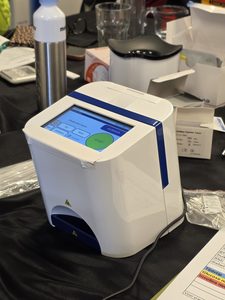
If you choose to monitor at home, devices that measure a full lipid panel provide significantly more meaningful insight than total cholesterol alone. The Swiss Point of Care Mission 3-in-1 measures TC, HDL, triglycerides, calculated LDL, and TC/HDL ratio from a single fingertip blood sample in under two minutes. It also calculates Framingham and PROCAM cardiovascular risk scores directly from your results.
View the Mission 3-in-1 cholesterol meter →
Available at swisspointofcare.vital20.com
Medical disclaimer: This article is for educational purposes only. Reference ranges are population-level guidelines; individual targets may differ. Always discuss your results and any changes to diet or treatment with a qualified healthcare professional.
Key references: Libby P. (2002). Atherosclerosis: The new view. Scientific American, 286(5), 46–55. • Mach F. et al. (2020). 2019 ESC/EAS Guidelines for the management of dyslipidaemias. European Heart Journal, 41(1), 111–188. • American Heart Association (2021). Cholesterol and Diabetes. • Krauss R. (2004). Lipids and Lipoproteins in Patients with Type 2 Diabetes. Diabetes Care, 27(6).