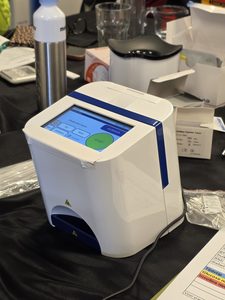
Cholesterol Monitoring – User Guides, Support & Technical Information

Welcome to the Swiss Point of Care cholesterol monitoring knowledge base. Here you'll find practical guidance, instructions, and background information to help you use your cholesterol monitoring system correctly and confidently — whether at home or in a professional setting.

This section is intended for people who already own a cholesterol monitoring device, as well as healthcare professionals looking for clear reference information.

On this page

Get started with your cholesterol meter

If you are new to cholesterol monitoring or want to refresh your knowledge, start here:

How to perform a cholesterol test

Before starting the test, ensure you have a clear, clutter-free space on a table. Gather all necessary items: the meter, test strips, safety lancet, and capillary and clean your finger with an alcohol wipe before pricking it, and consider using a small plaster afterward

Read More »

Frequently Asked Questions (FAQ)

In this section, you’ll find clear answers to common questions about our products, how they work, and how to use them effectively. Whether you’re new to self-testing or looking for more details, this page helps you get the right information quickly.

Read More »

Step-by-step video guide

To help you navigate the video more easily, the key topics are listed below with timestamps:

  • 0:00 – Intro
  • 00:21 – What’s inside the box?
  • 01:20 – How to set up the meter
  • 05:49 – How to perform a cholesterol test
  • 12:00 – Frequently asked questions
  • 12:02 – What does the E5 error mean?
  • 13:13 – What does the E6 error mean?
  • 13:37 – What do dashes on my LDL reading mean?
  • 14:32 – What’s in this small bottle?

Activate and extend your warranty

Registering your cholesterol monitoring device activates your warranty and qualifies you for an extended warranty period. Registration takes less than a minute and helps ensure faster and better support if you ever need it.

By registering your meter within 3 months after purchase, Swiss Point of Care extends the standard manufacturer warranty for your Mission 3-in-1 Cholesterol Meter to 5 years

On the warranty page, you can:

Where to buy cholesterol test devices and consumables

Cholesterol monitoring devices and test strips supported by Swiss Point of Care are available via Vital20, our authorised online shop for consumers and professionals.

Different test strip pack sizes are available depending on the intended use.

Available test strip pack sizes

Starter pack – 5 tests (consumer use)

This pack is intended for personal cholesterol monitoring at home.
Includes:

  • 5 × cholesterol test devices
  • 5 × safety lancets
  • 25 × capillary transfer tubes
  • 1 × code chip


This pack is suitable for individual users who test occasionally and want to minimise unused tests before expiration.

Professional pack – 25 tests (professional use)

This pack is intended for use in professional care or screening settings.
Includes:

  • 25 × cholesterol test devices
  • 25 × capillary transfer tubes
  • 1 × code chip


Safety lancets are not included and are supplied separately in packs of 50.
Due to the typical shelf life of cholesterol test devices (usually 9–12 months), this pack is not recommended for consumer use.

Mission Safety lancets (25 pcs)

Safety lancets are designed for single use and provide a consistent puncture depth and blood volume suitable for cholesterol testing.

  • Single-use, sterile safety lancets
  • Designed to produce the correct puncture size and sufficient blood volume
  • Standard lancing devices used for glucose or diabetes testing are not suitable, as the puncture opening is typically too small for cholesterol testing


For reliable results, always use safety lancets that are appropriate for cholesterol testing.

Mission Capillary transfer tubes (50 pcs)

Capillary transfer tubes are used to collect and apply the blood sample to the test device.

  • Glass capillary tube for reliable capillary absorption
  • Designed to collect the exact required sample volume (35 μL)
  • Ensures accurate and reproducible sample application


Using the correct capillary volume is essential for accurate cholesterol measurements.

Cholesterol control solution

The Mission® Cholesterol Control Solution is used to verify that the meter and test devices are working correctly and that the test procedure is being performed properly.

  • Used for quality control testing (not for calibration)
  • Available in two levels, covering Total Cholesterol and HDL/Triglycerides
  • Suitable for both professional use and self-testing
  • Applied directly to the test device instead of blood

Control testing is recommended:

  • when opening a new pack of test devices
  • if test results appear unexpected
  • after meter cleaning or storage
  • as part of routine quality assurance in professional settings

Using the control solution helps confirm correct system performance before blood testing.

Important note on expiration dates

Cholesterol test devices have a limited shelf life. For personal use, smaller pack sizes are recommended to ensure that tests are used within their validity period.

Understanding cholesterol values

Learn more about what your results mean and how cholesterol monitoring is commonly used:

  • Total cholesterol, HDL, triglycerides, and calculated LDL
  • Why trends over time matter
  • Interpreting results responsibly
  • Cholesterol monitoring in personal and professional contexts


Important: Trends over a longer period are more meaningful than single measurements.

Troubleshooting and support

If you experience issues while testing, many common questions and practical issues are answered in our Frequently Asked Questions (FAQ). The FAQ covers topics such as:
  • Error messages and solutions
  • Test strip handling and storage
  • When to repeat a measurement
  • When to contact customer support

Important note

Cholesterol monitoring supports insight and trend observation. It does not replace laboratory diagnostics, medical diagnosis, or professional medical advice. Results should always be interpreted in context and, where appropriate, discussed with a healthcare professional.

Share the Post: